Utah - The Greatest...*Rain* on Earth?!?

(originally published in winter 2026 The Avalanche Review)
It was towards the end of the 2002/2003 winter when Utah Avalanche Center forecaster Evelyn Lees wrote that the Wasatch range was like “A cake decorated by a child, where they put frosting on top but they forgot the sides.” That winter was definitely a lean one, but there was more to the story. The UAC Annual Report from that year indicated that, “even though February, March and April ended up near average at upper elevations, very little low elevation snow fell. Although high elevation places like Alta ended up at 79 percent of normal, most mountain areas were between 50 and 70 percent, while Salt Lake City, ended up with only 36 percent of normal snow for the winter.”
But there was another reason why the frosting was only on the top of the cake that year. It was my third winter at the Utah Avalanche Center and I was on the phone with fellow forecaster Tom Kimbrough on the night of December 11th, 2002. Tom and his wife were returning from a short trip to the Tetons…and were just about to crest Parley’s Summit in Parley’s Canyon (elevation 7000’). And then I heard Kimbrough exclaim, What the f*ck?
Rain. And rain to all elevations. And so I catalogued this event as an anomaly. But I never forgot it.
Fast forward to this winter of 2025/2026. Rain to the highest elevations on Christmas Day and rain to almost the highest elevations on New Year’s Day. And those are just a couple examples. Over my career, I have never so frequently had to forecast the incoming rain-snow line as this year. Cue the frosting on the cake metaphor again. These high rain-snow lines have significant ramifications on snowpack structure, water storage, and avalanche forecasting.
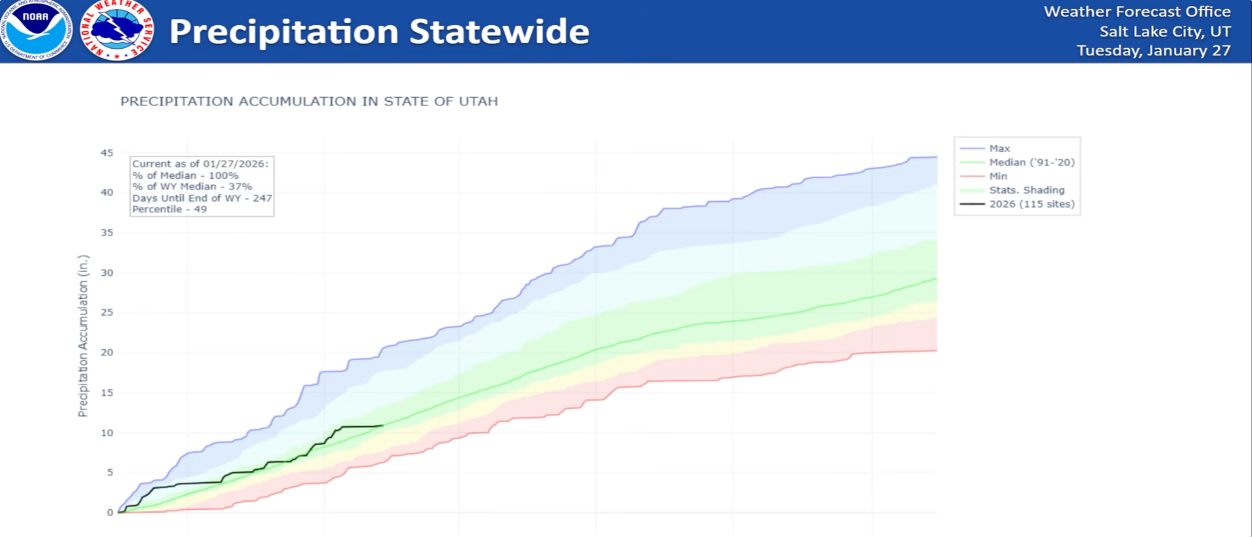
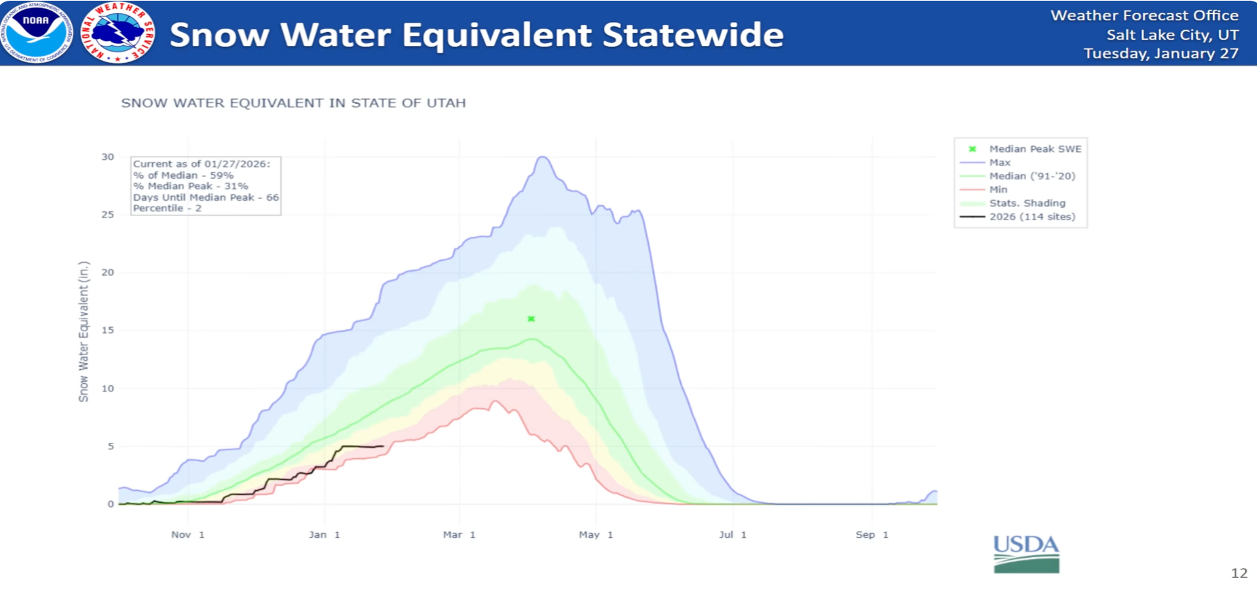
For this winter, the current Precipitation and Snow Water Equivalent maps (on January 27, 2026) also tell the tale. In a perfect winter world, they would be the same - but this winter, they are very different indeed. Look at the Precipitation map below: It shows that - at the state level - we are at 100% of median for the water year (starting October 1st). But the SWE map tells a very different story: We sit at 59% of the median for the year. It doesn’t take a hydrologist to see that a great deal of the precipitation has not fallen as snow; instead, it has fallen as rain.
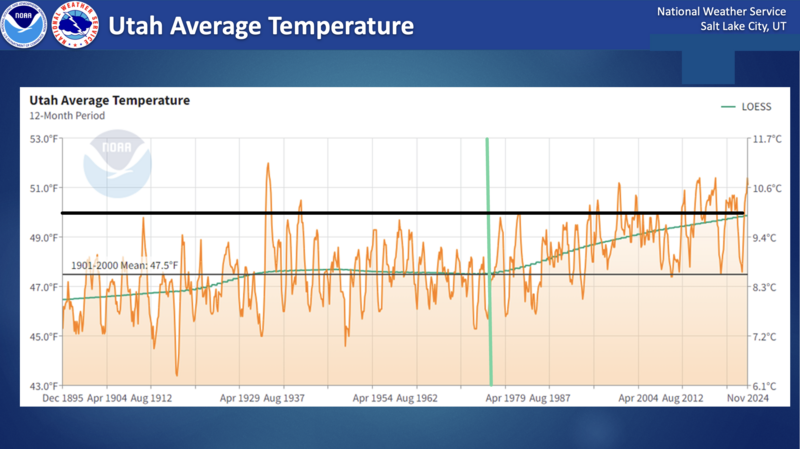
Now let's look at the Utah average temperatures since 1895, below and note - despite a lot of annual swings - the overall increase…and then more rapid increase over the last 50 years or so.
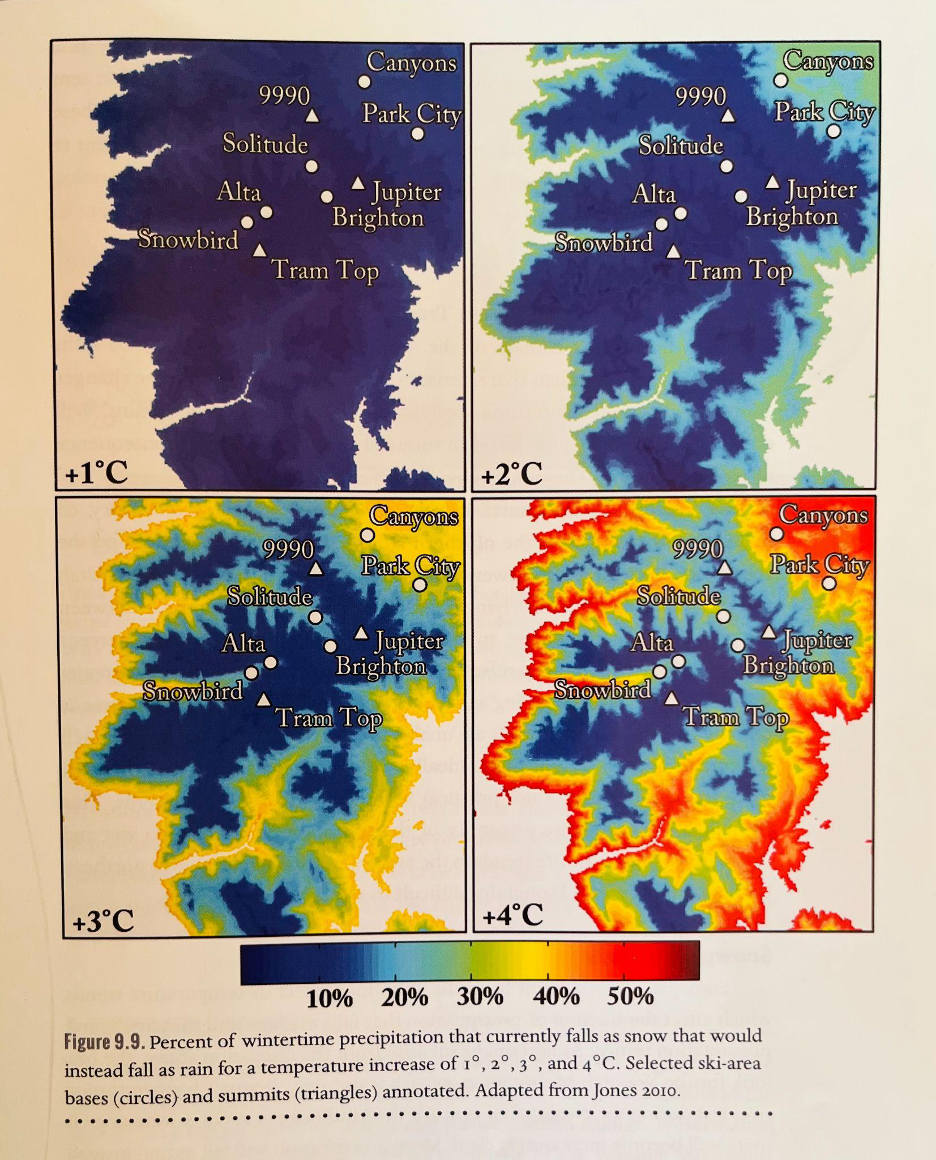
And now let's take a look at Leigh Jones' master’s work in 2010. She mapped out the % of winter precipitation that would fall as rain in the central Wasatch with a potential increase in temperatures +1°C, +2C°. +3C or +4C.
My conversation that night with Tom Kimbrough was nearly 25 years ago, but it subconsciously put rain on my radar for many years to come. There are many questions that remain unanswered, but what I do know is that if we continue to see warmer winters, difficulty in avalanche forecasting will be the least of our problems.
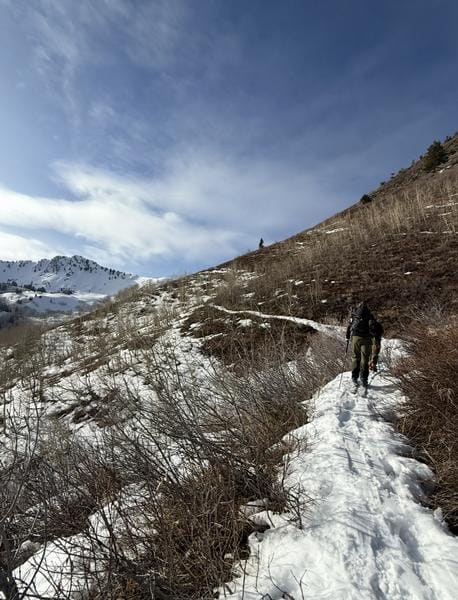
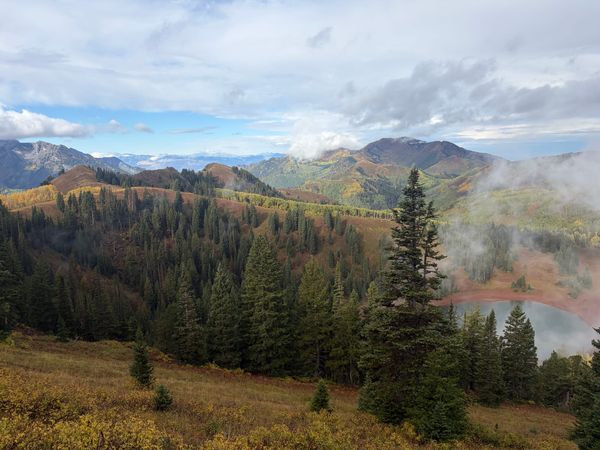
Nikki Champion photo, January 30th, 2026. Mill A Basin, Big Cottonwood Canyon mid-elevation band
❄️
❄️
❄️
Special thanks to the Glen Merrill and Hayden Mahan of the Salt Lake City National Weather Service (NWS) and thanks to the National Resources Conservation Service (NRCS). Thanks also to Leigh Jones, who was an occasional ski partner, and Jim Steenburgh, atmospheric sciences professor at the University of Utah, and author of Secrets of the Greatest Snow on Earth, from which this graphic was borrowed. Thanks also to Larry Dunn, retired meteorologist-in-charge of the Salt Lake City NWS.
ASSESSING THE SENSITIVITY OF WASATCH SNOWFALL TO TEMPERATURE VARIATIONS by Leigh Pender Jones, 2010 Assessing the sensitivity of Wasatch snowfall to temperature variations | Institutional Repository | J. Willard Marriott Digital Library
Evidence of a Warm Snow Drought, Prof Jim Steenburgh, Jan 9, 2026, blog wasatchweatherweenies.com
Utah Avalanche Center Season report 2002/2003 https://utahavalanchecenter.org/sites/default/files/archive/annual-reports/uac/AnnualReport2002-03.pdf